 →
→ 

Life-Changing Cheater’s Croissant Dough
 By Alexandra Stafford
—
06/27/2026
By Alexandra Stafford
—
06/27/2026
This post may contain affiliate links. Please read my disclosure policy.
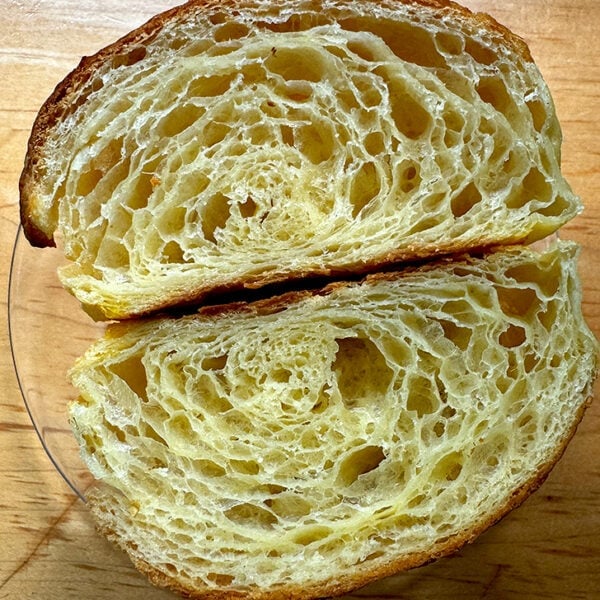
Below you will find a faster, easier way to make croissant dough, requiring no lamination of butter and no complicated shaping techniques. The dough comes together in under 10 minutes and produces a flaky, buttery pastry that can be used for both sweet and savory purposes, including croissants, Danishes, kouign amann, and more.
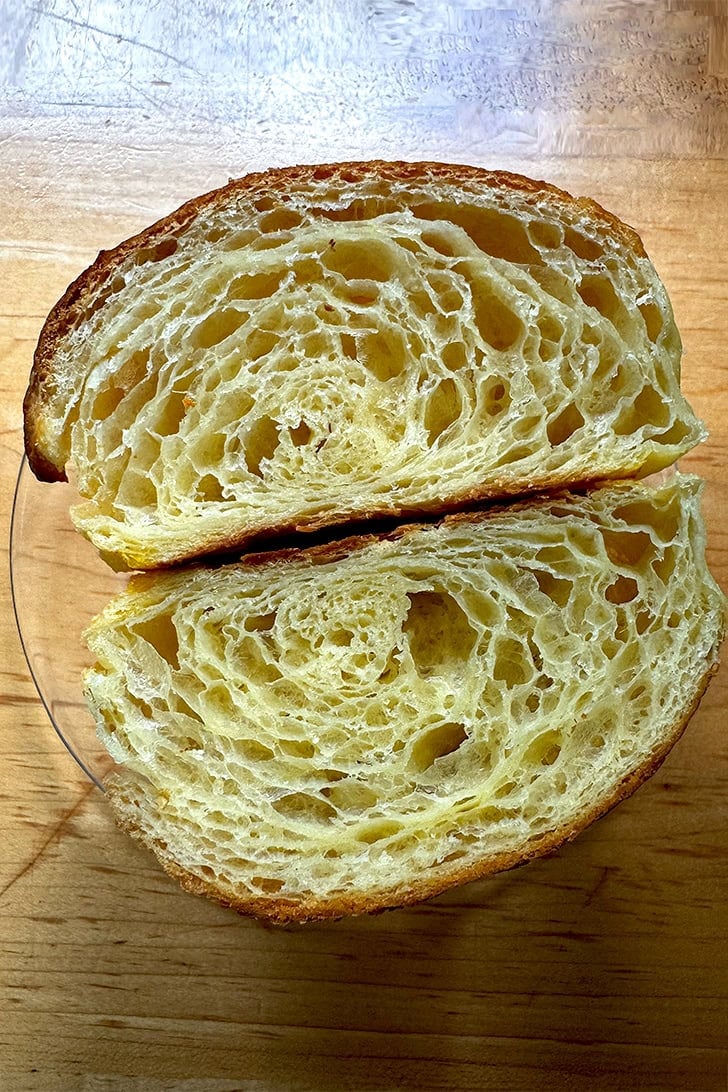
Traditional croissant dough requires a technique called lamination, a laborious process of folding and rolling butter into the dough to create hundreds of layers. The butter must not be too warm or too cold to ensure it incorporates properly into the dough, and the whole process requires many steps of resting and refrigeration.
Or does it?
Many years ago, I read about an easier way to make croissant dough in Nigella Lawson’s How to Be a Domestic Goddess. In the intro, Nigella describes the practice of making this sort of pastry dough in the food processor as revolutionary, not only because the dough comes together in seconds but also because it produces an authentic Danish pastry. She learned the method from Scandinavian chef Beatrice Ojakangas, who told her: “Don’t think you’re cheating by taking the fast track — this is how it’s done these days all over Denmark.”
This recipe truly is life-changing, especially if you’ve ever braved the traditional lamination process. While it does require a series of rolling and folding, it does not require any complicated shaping techniques, and it calls for cold butter. It produces a pastry that is both light and airy and rich and buttery.
Find step-by-step instructions below for making the dough, which you can use for cheese danishes, ham-and-cheese croissants, kouign amann, or anything calling for a croissant-like dough.
How to Make Cheater’s Croissant Dough, Step by Step
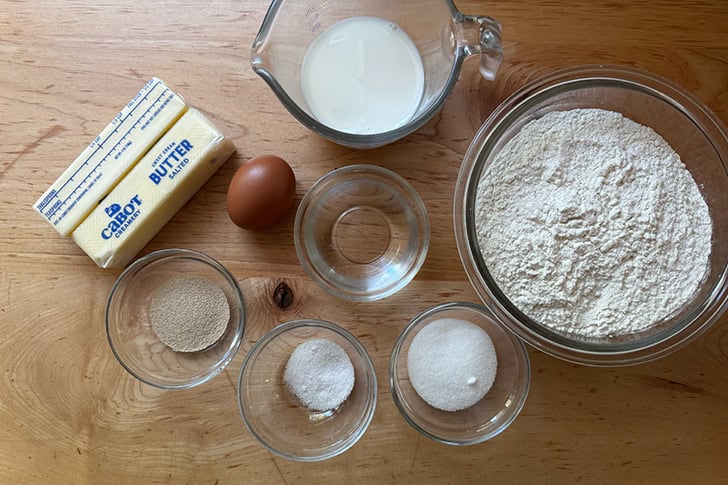
First, gather your ingredients:
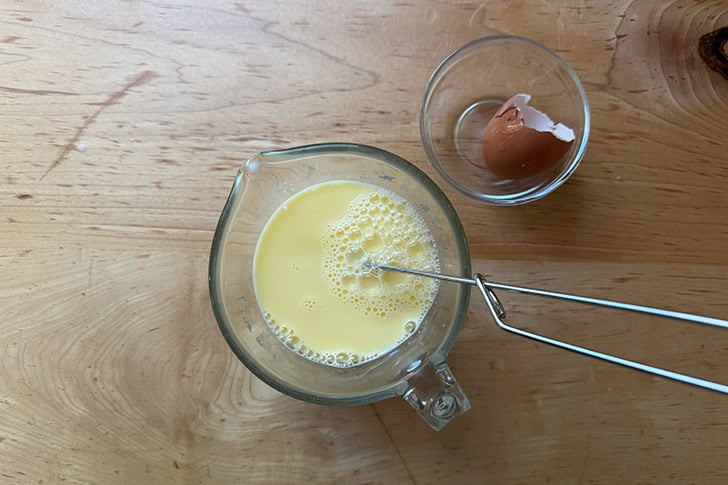
Combine the milk and water in a liquid measure. Crack the egg into the measure, and whisk to combine:
Place the dry ingredients — flour, salt, sugar, and instant yeast into a food processor:
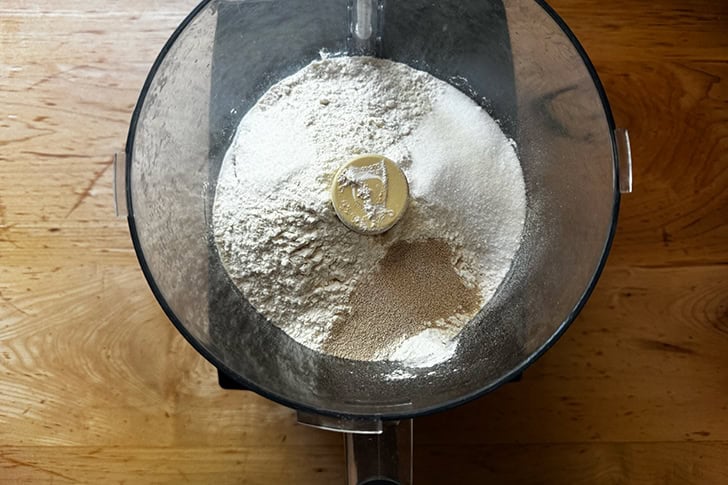
Whiz until blended, then add the cold, thinly sliced butter:
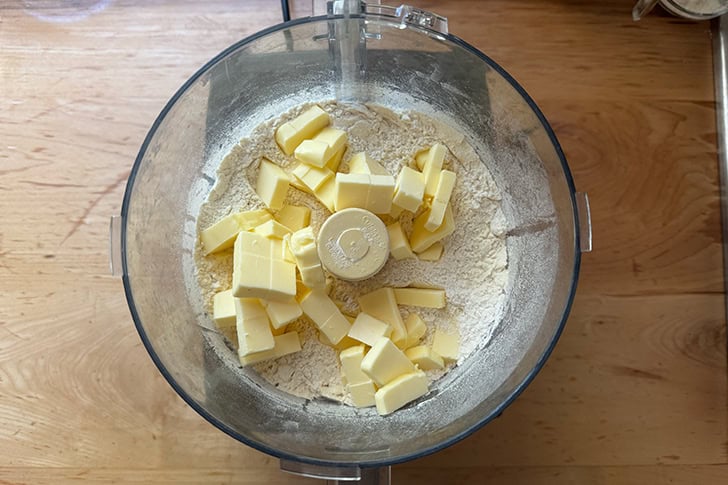
Pulse 10 times at 1-second intervals:
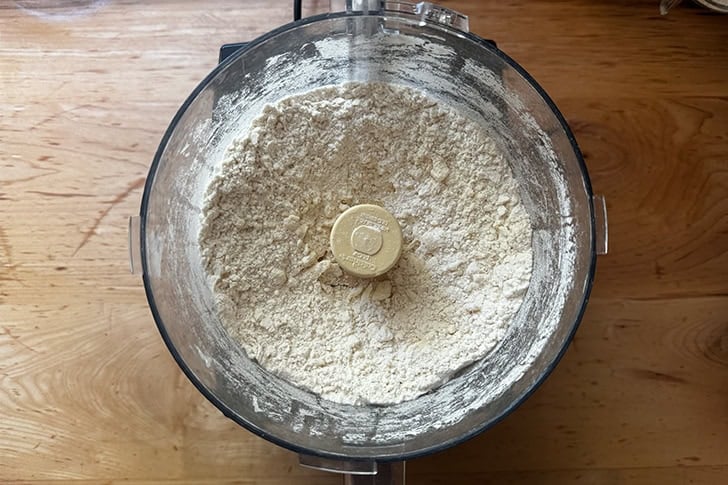
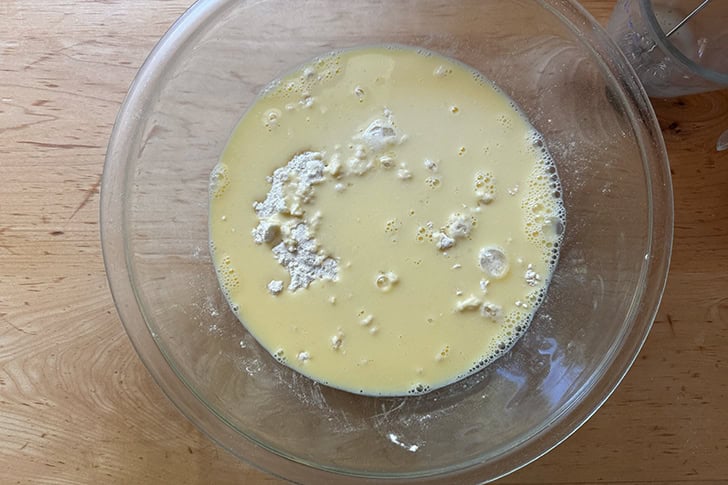
Transfer the contents to a large bowl, then add the egg-milk-water mixture:
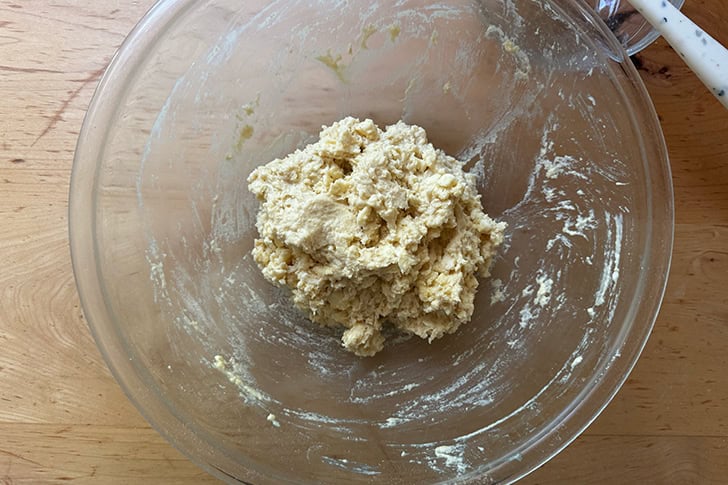
Stir until you have a sticky mass:
Cover the bowl and refrigerate for at least 2 hours and up to 4 days. When you are ready to roll, remove the bowl from the fridge:
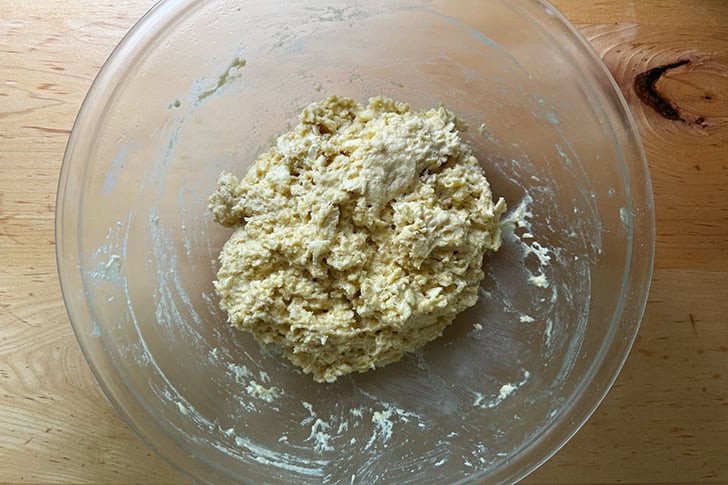
Turn it out onto a floured work surface:
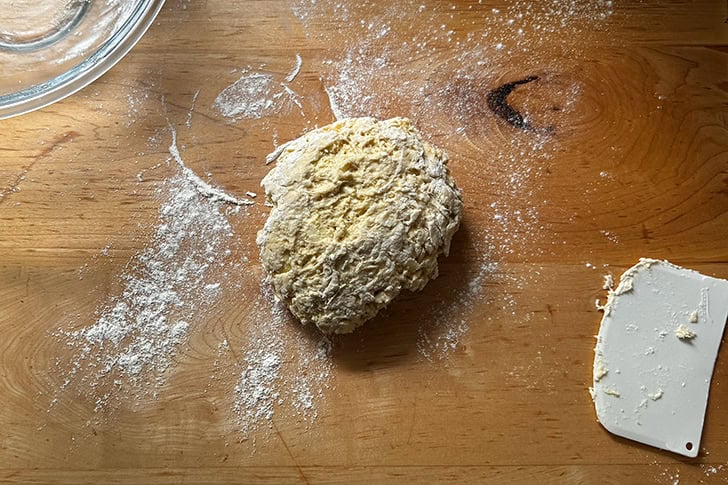
Divide it into two equal portions (roughly 384 grams each):
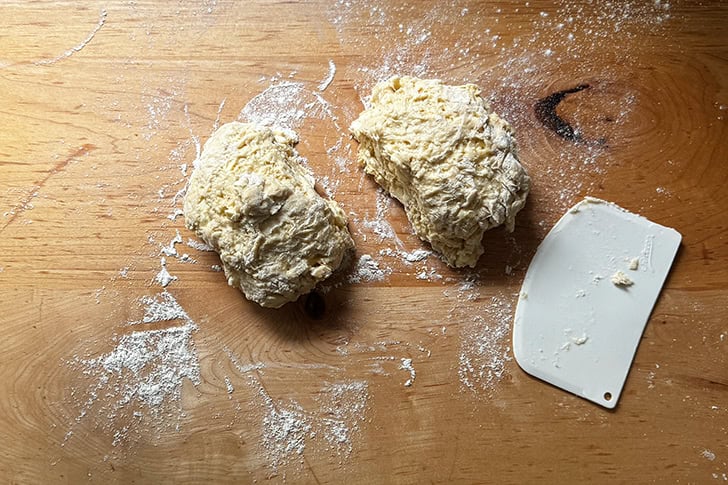
Pat each portion into a rough square or rectangle:
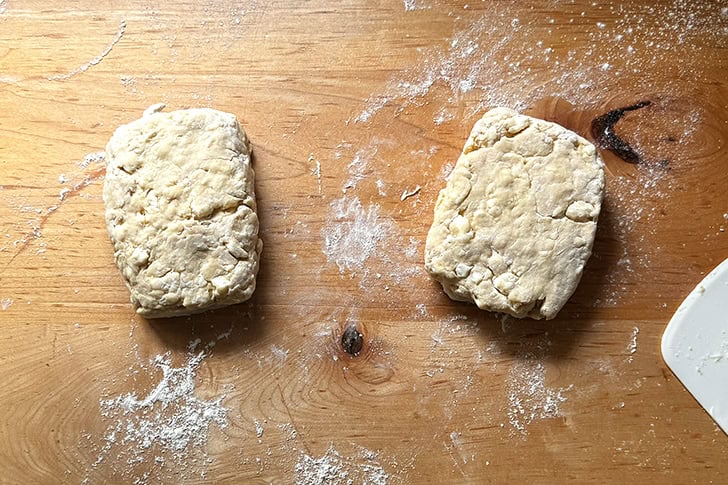
Working with one portion at a time, roll out the dough into roughly a 10- to 11-inch square:
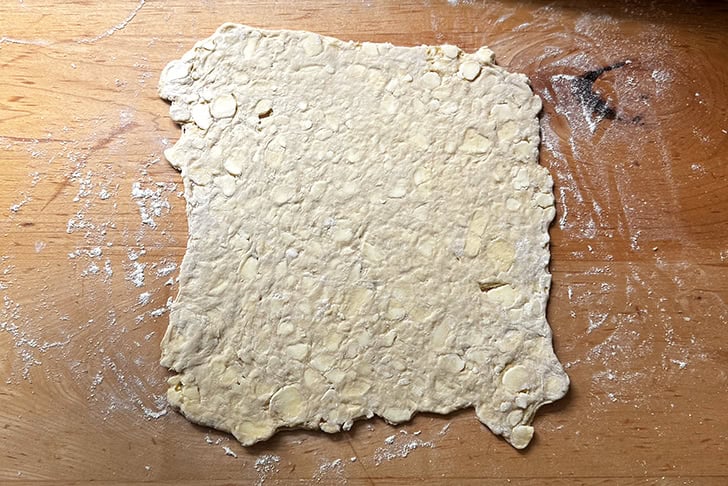
Fold the top third of the dough down:
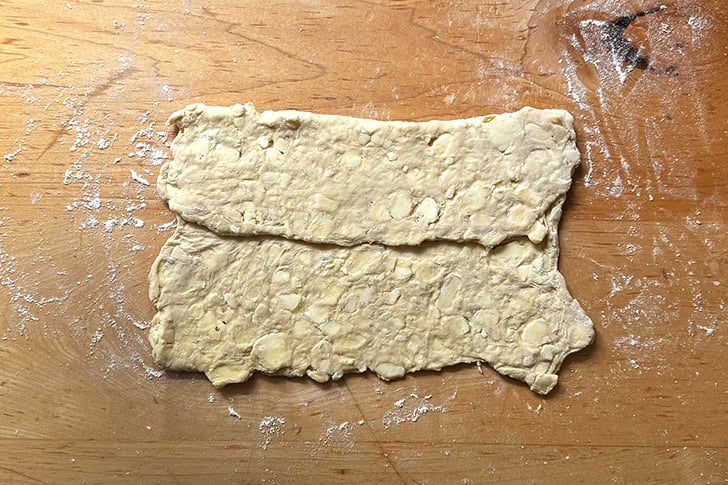
Then the bottom third up:
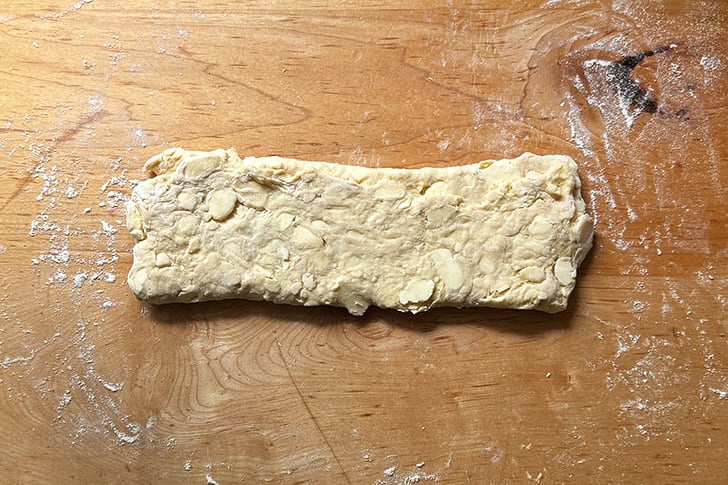
Then fold the dough from right to left:
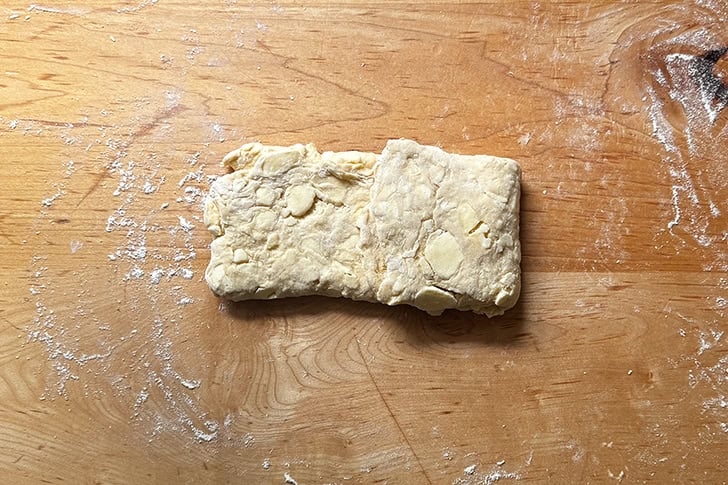
Then from left to right, to create a square. At this point, you’ve completed one set of folds.
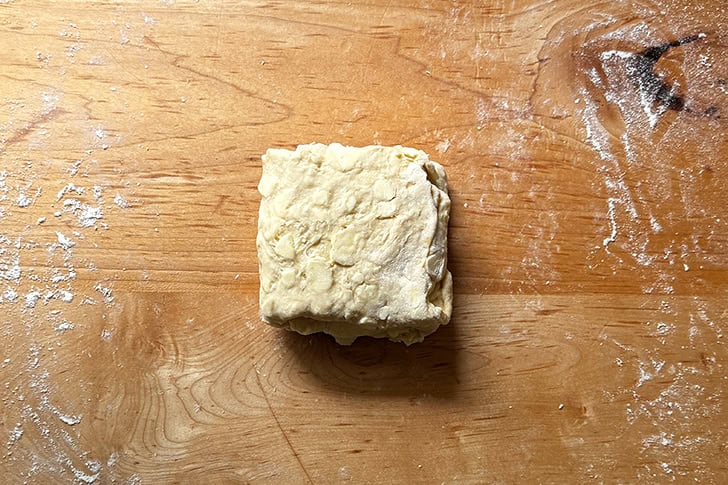
You are now going to repeat this three more times. When the fourth set of folds is complete, your dough will be smooth with little to no signs of butter flecked throughout it:
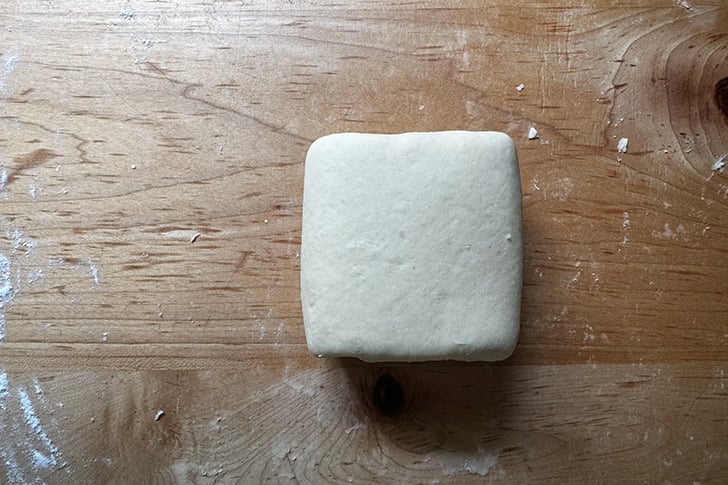
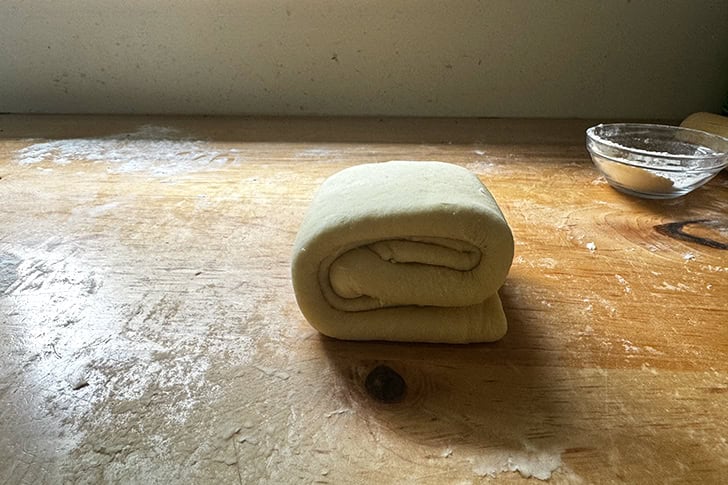
Transfer your smooth, folded croissant dough to an airtight container and refrigerate for at least 30 minutes or up to 4 days.
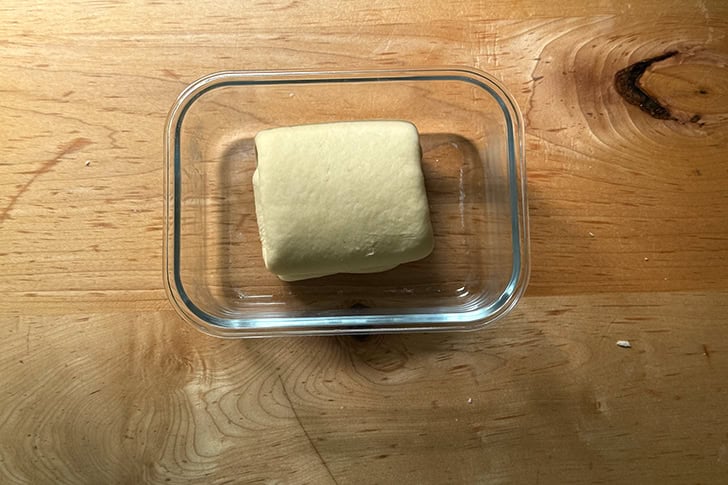
Repeat this process with the remaining half of the dough. At this point, the croissant dough can be frozen.
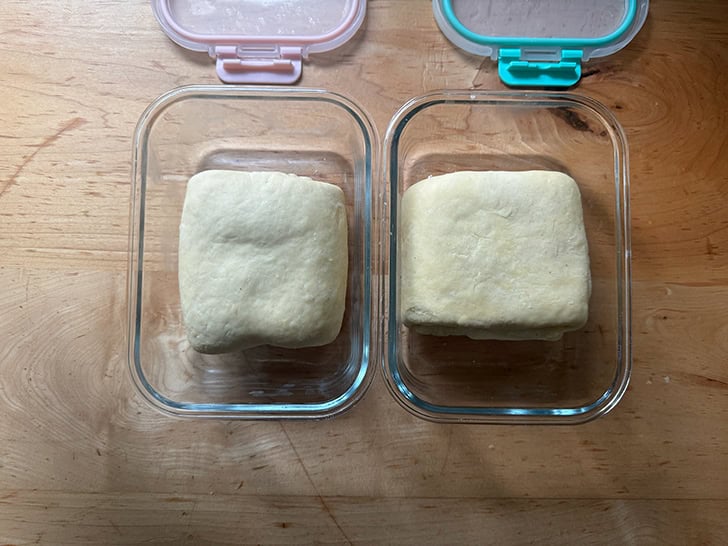
Use this dough to make cheese danishes, ham-and-cheese croissants, or kouign amann.
How to Make Croissants, Step by Step
To make classic croissants, remove the dough from the fridge:
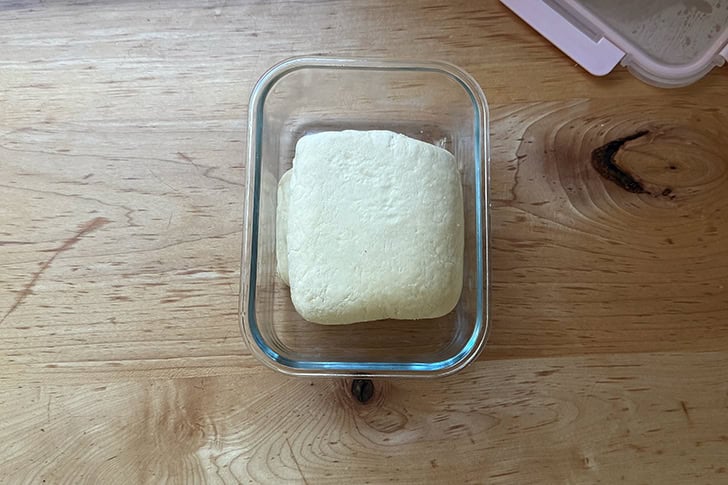
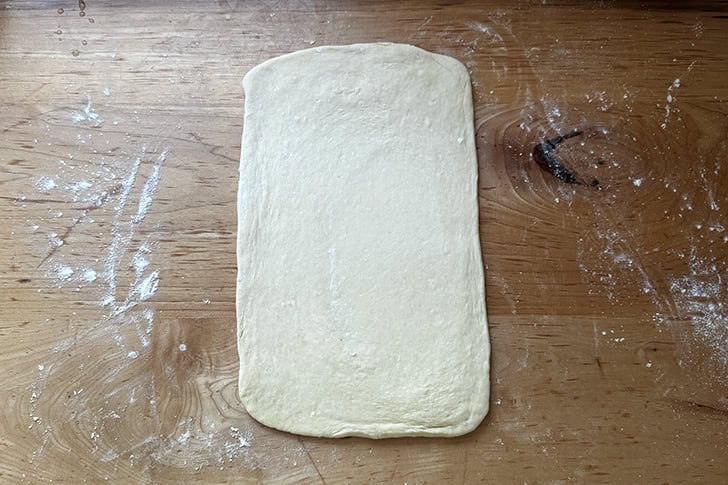
Then roll it out into an 8×12-inch rectangle:
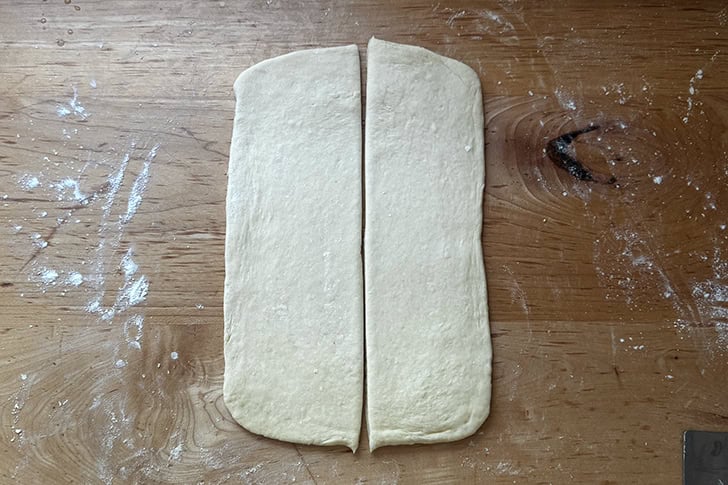
Cut the dough in half:
Then into triangles:
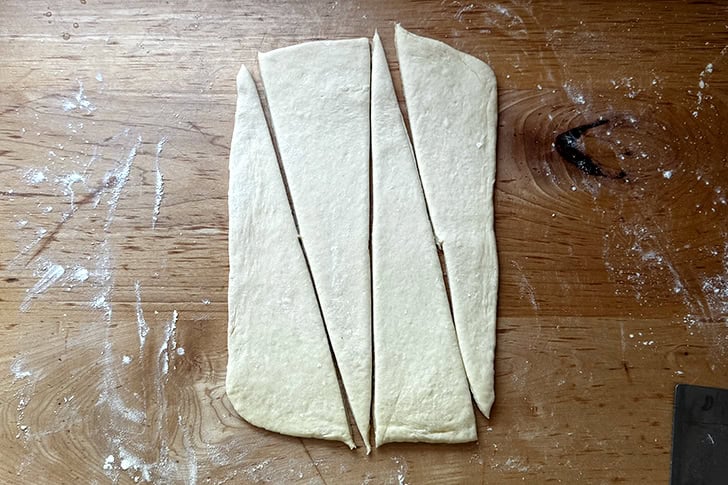
Arrange the triangles so that each flat end is closest to you:
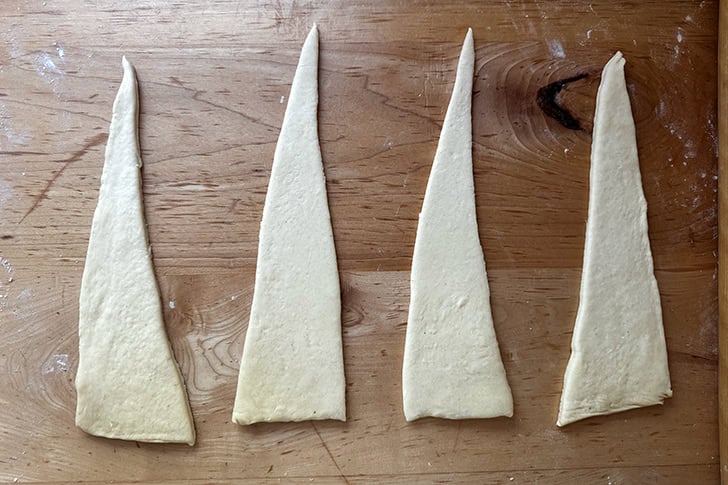
Then coil up each triangle, starting at the flat end, ending with the tip tucked underneath.
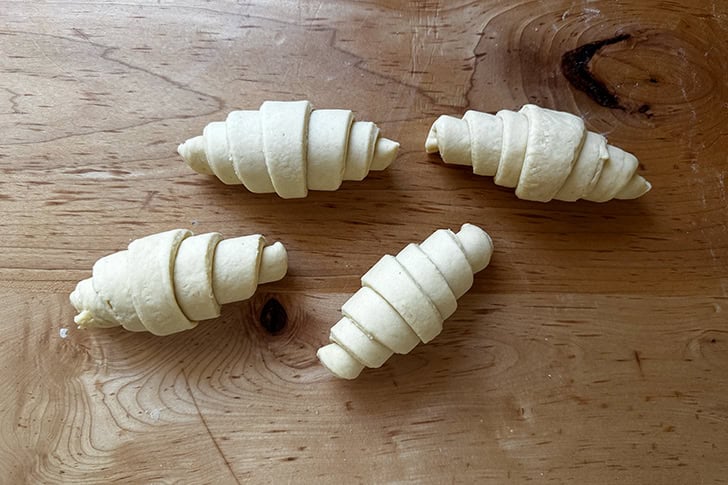
Transfer the croissants to a parchment-lined sheet pan:
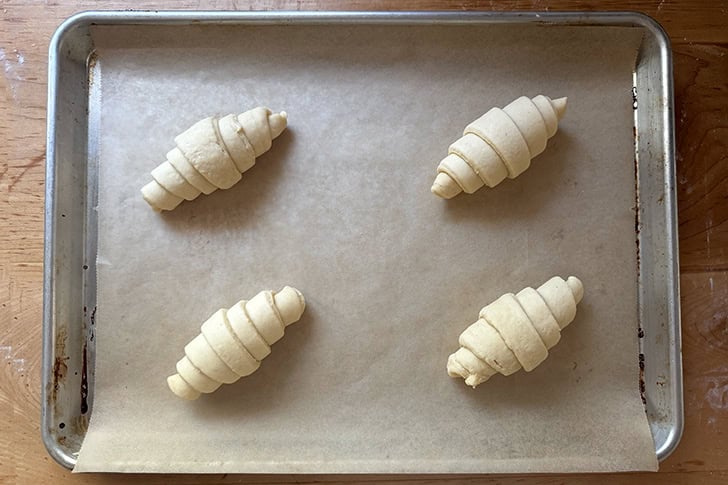
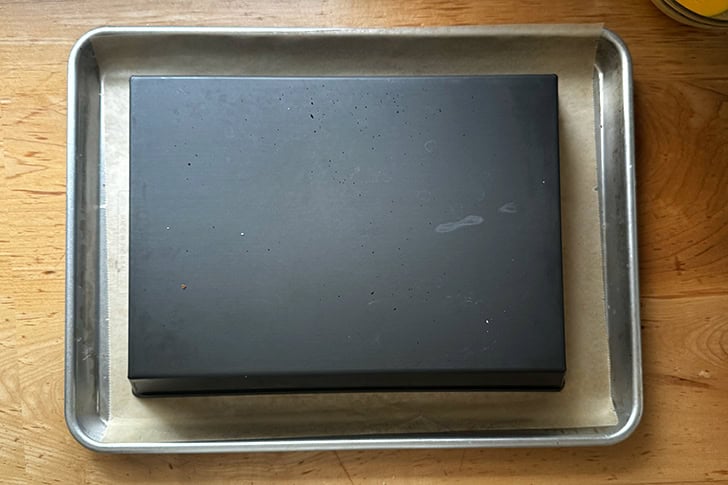
Let proof at room temperature for 2-3 hours (see notes in recipe box for more specific times and temperatures). I like to cover the croissants with a pan to keep them from drying out.
Once proofed, brush the croissants with an egg wash:

Then transfer to the oven and bake until golden all around, about 15 minutes at 400ºF:


Transfer to a cooling rack:


Then, enjoy!
Life-Changing Cheater’s Croissant Dough
- Total Time: 1 hour 15 minutes
- Yield: 8 croissants 1x
Description
This recipe outlines a faster, easier way to make croissant dough, requiring no lamination of butter and no complicated shaping techniques. The dough comes together in under 10 minutes and produces a flaky, buttery pastry that can be used for both sweet and savory purposes, including croissants, Danishes, kouign amann, and more.
Notes:
- If you don’t have a food processor: Freeze the butter, then grate it into the dry ingredients. Use the back of a fork to further incorporate it into the dry ingredients. Then proceed with the recipe.
Ingredients
processor danish pastry:
- 1/4 cup (60 grams) water, room temperature or tap
- 1/2 cup (125 grams) milk, 2% or whole
- 1 large egg
- 2 1/4 cups (286 grams) all-purpose flour, plus more for dusting
- 2 teaspoons (7 grams) instant yeast
- 1.5 teaspoons (6 grams) Diamond Crystal kosher salt
- 2 tablespoons (25 grams) sugar
- 1 cup (227 grams) butter, salted or unsalted, cold, cut into thin slices
for the croissants:
- flour for dusting
- 2 egg yolks
- 2 tablespoons heavy cream
- pinch sea salt
Instructions
- Mix the dough: In a medium bowl or 2-cup liquid measure, whisk together the water, milk, and egg. In a food processor, blend together the flour, yeast, salt, and sugar until well combined. Add the cold butter, and pulse 10 to 12 times at 1-second intervals, until the butter is in small pea-sized pieces. Transfer the contents of the food processor to a large bowl. Add the water-milk-egg mixture, and, using a spatula, stir until you have a wet, sticky mass. Cover the bowl and refrigerate for at least 2 hours or up to 4 days.
- Roll it out: Turn the dough out onto a lightly floured work surface and divide it into two equal portions, each roughly 384 grams. Pat each portion into a rough square. Set one aside while you begin working on the next: using flour as needed, roll the square out, flipping it as needed to prevent sticking, until you have a shape 10- to 11-inches wide/tall — it’s OK if, at this point, it looks a little misshapen. Fold the dough envelope-style: the top third down over the dough, then the bottom third up. Then fold the right third of the dough from right to left and then from left to right, to ultimately create a square. (see photos for reference). You’ve now completed one set of folds. Repeat this process 3 more times: roll the dough out into a large, thin square, then fold the dough envelope-style from top to bottom and from right to left. By the end of the four sets, the dough will be smooth, and there should be little to no visible signs of butter flecking the dough.
- Chill it: Transfer the folded dough to an airtight container and transfer to the fridge for at least 30 minutes or up to 2 days. At this point, the dough can be frozen. Repeat with the remaining portion of the dough.
- Make pastries: From here, proceed with any of the recipes suggested above or any recipe calling for a croissant-like dough.
- To make croissants: Using flour as needed and working with one portion at a time, roll the dough into an 8×12-inch rectangle. Cut the dough in half vertically to create two long rectangles, each 4 inches wide. Then cut each rectangle diagonally to create 4 triangles. Starting at the flat end, coil up each triangle into a croissant shape, ending with the tip tucked underneath. Transfer the croissants to a parchment-lined sheet pan. Cover them with a pan — I use a turned-over 10×14-inch pan — to prevent them from drying out. Repeat with the remaining dough.
- Proof: Let the croissants proof at room temperature (ideally between 75ºF and 80ºF) for roughly 2 hours. If your kitchen is colder, this may take longer; if it’s warmer, it may take less time. The coils are ready to bake when they have nearly doubled in size and feel marshmallowy to the touch.
- Prepare the oven and make the egg wash: Preheat the oven to 425ºF. If you have two ovens, preheat both of them — I prefer to bake one pan of croissants at a time to ensure they bake/brown evenly. In a small bowl, whisk together the yolks, heavy cream, and salt. Working with one pan at a time, brush each croissant with the egg wash, then wait 5 minutes. If you are working with one oven, wait to brush the other set of croissants until the first pan is nearly finished baking.
- Bake the croissants: Transfer the pan to the oven, immediately lower the temperature to 400ºF, and bake for roughly 15 minutes, or until the croissants are golden brown to your liking. Remove the pan from the oven and transfer the croissants to a cooling rack. Let the croissants rest briefly before serving. Repeat with the remaining pan of croissants.
- Prep Time: 1 hour
- Cook Time: 15 minutes
- Category: Pastry
- Method: Baking
- Cuisine: French
This post may contain affiliate links. Please read my disclosure policy.















21 Comments on “Life-Changing Cheater’s Croissant Dough”
Hi Ali,
I am intrigued and will definitely try this recipe. Question – when making croissants the traditional way, you chill the dough in between rolling and folding. I don’t see any instructions to chill this dough in between re-rolling and folding. Can you please confirm whether we should chill the dough (if so, for how long) in between the 4 roll-and-folds?
Thank you!
Ellen
Hi Ellen! That is the beauty of this recipe… there is no chilling in between each set of rolls and folds. I have a video coming… should be up later today. Hope you love the method/recipe 🙂
I cannot even tell you how excited I am about this recipe!! my goal this summer has been to master making a good croissant. I have made a couple different recipes with limited success. I love that this will cut some time out of the process – making the learning so much less difficult to fit into my life! Thank you!!!
Yay! I hope you love it. I just added the video to the post 🙂
I have never tried lamination because I have been concerned about wasting butter if I failed.
One question about the flour. Specifically which brand of AP flour did you use? I know you order flours directly from mills that I don’t have at home. I have king Arthur AP and bread flours but your flour may be a different protein percentage. This information would make me a bit more confident that I might succeed. Thanks, Patty
Hi! I always use King Arthur all-purpose flour for recipes like this one. Go for it! It’s such a good, fun recipe.
Thank you, I will definitely try it.
1 hr prep total? Amazing, I must try this after watching your video. Waiting for it, thank you! ❤️
Video is uploaded! I’d say it requires 1 hour of total work — mixing the dough, rolling it out to make the dough, rolling it out again to make the croissants, egg washing, etc. — it honestly might be less time total. But there is resting time — at least 2.5 hours total.
Thank you Alexandra! I can’t wait to try it! Your recipes rock and so do you! Appreciate all the work it takes to develop, test, taste, video and photograph all your recipes! 🙏🏻❤️
Awww, thanks, Jenny 🙂
I am so excited to try this recipe!! And the kougn-amann variation as well – how did I not know you had already shared that?! They are one of my favorite pastries, but the lengthy, traditional method has always kept me from attempting my own.
Your super simple method is the most compelling part, of course (and you always do an amazing job at breaking down a process into manageable steps – the life-changing focaccia is exhibit A), but the 2nd best part is that I could easily just bake 4 croissants and freeze the rest of the dough for another day. As a family of 2, being given the tools to easily scale down a recipe is priceless.
Thank you so much!
If I freeze the dough do I thaw it in the fridge and the proceed as per the recipe. Or do I thaw it at room temperature
Thaw in the fridge! 24 hours should be fine.
Wow, I can’t wait to try this recipe….thank you! Just out of curiosity, is it possible to make the more “traditional” chocolate croissants with this same dough? If so, might you have any suggestions or recommendations? Yes, chocolate is always on my mind!!! Thank you.
Yes, absolutely! For chocolate croissants, I think the shaping is a little different: you’ll cut the dough into rectangles instead. I found this short video: https://www.youtube.com/watch?v=uKO8XziKYY4
In the video and in the step by step photos and directions; it lists baking temp at 400F. In the actual recipe it say 425F. Which one is correct? Thanks!
Oops! Ignore my comment; didn’t read to the end….
Glad you found your answer! Thanks for writing 🙂
Would this recipe work with a “fancier” flour? I purchased several bogs of Dallagiovanna Refresco Lievito Madre flour (15% protein) for making traditional laminated croissants. If I can put it to use in an easier croissant recipe I’m all for it!
That sounds like beautiful flour! Yes, go for it 🙂