 →
→ 

How to Make Homemade Rye Bread
 By Alexandra Stafford
—
Last Updated: 05/12/2026
By Alexandra Stafford
—
Last Updated: 05/12/2026
This post may contain affiliate links. Please read my disclosure policy.
Made with a mixture of bread and rye flours, a small amount of honey, and a few teaspoons of caraway seeds, this simple no-knead rye bread tastes beautifully tangy with a hearty, chewy texture perfect for sandwiches or toast. It comes together in no time and bakes in a single loaf pan, but the recipe can be doubled, and the baked bread freezes very well.
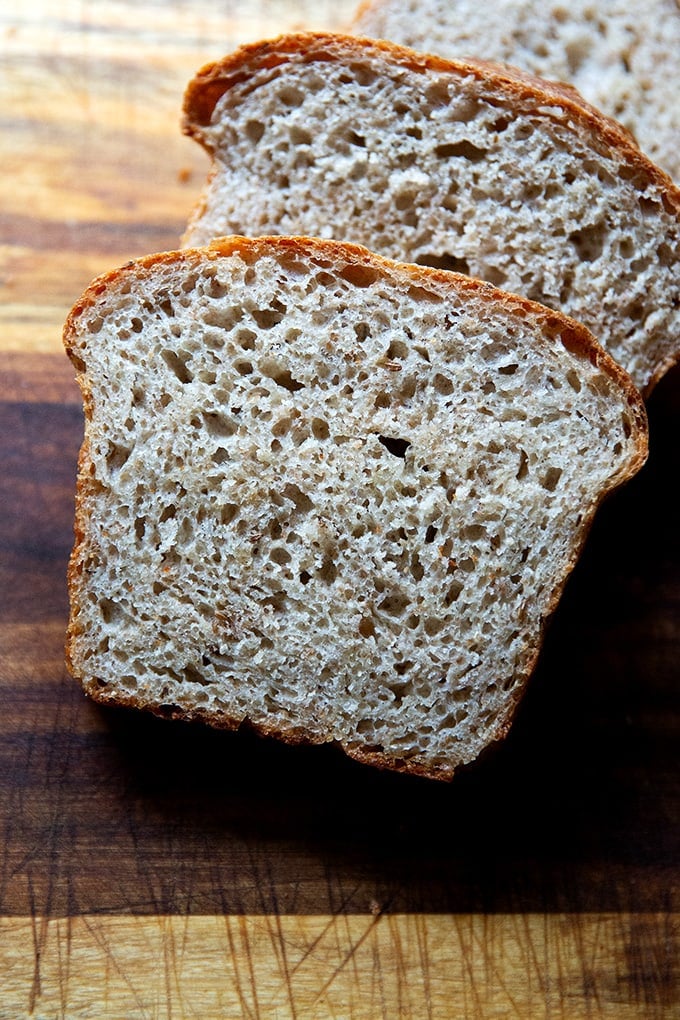
Rye bread has a reputation of being dense and heavy as well as aggressively sour in flavor. While some people love these qualities, others do not. I love a rye bread with a subtle tang and a hearty but not leaden texture.
This no-knead rye bread is just that: made with a mixture of bread and rye flours, the texture of the finished loaf is light enough for a sandwich but makes excellent toast as well. A small amount of honey balances out the sourness and lends a nice chew, while caraway seeds, which can be left out, impart subtle notes of citrus and anise.
This recipe calls for 1 cup of rye flour and 3 cups of bread flour, and while you could play around with increasing the proportion of rye in this recipe (which is roughly 20% by weight), keep in mind that the more rye flour you use, the denser your bread will be. See the recipe box for details.
Homemade Rye Bread, Step by Step
This recipe calls for a mix of rye flour and bread or all-purpose flour.
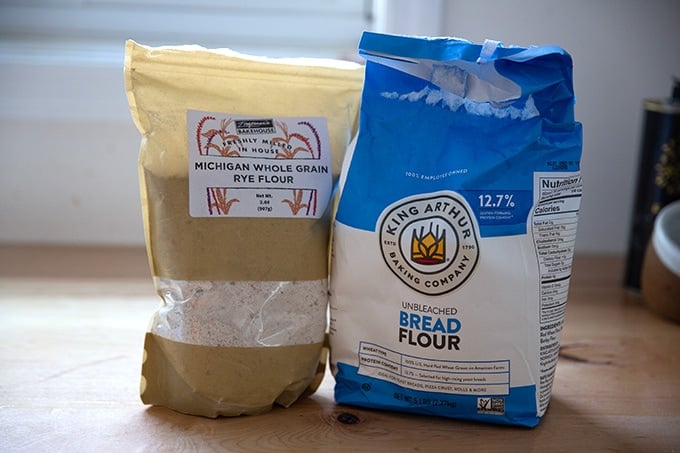
Please use a scale to measure! It is the only way to ensure you are measuring accurately.
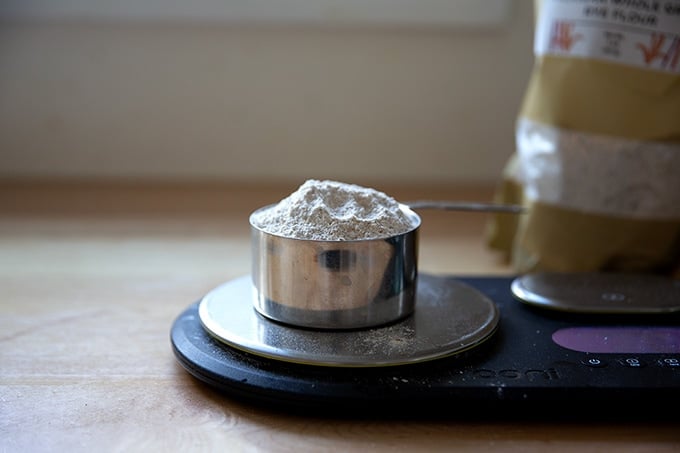
Once you have your ingredients measured accurately…
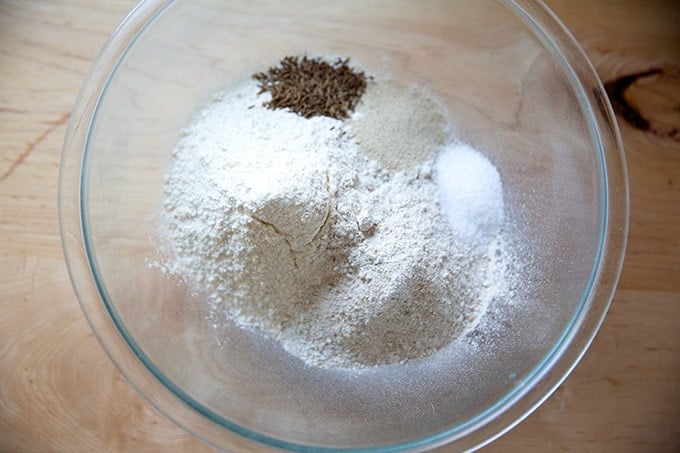
…whisk together the flours, salt, instant yeast, and caraway seeds, if using.
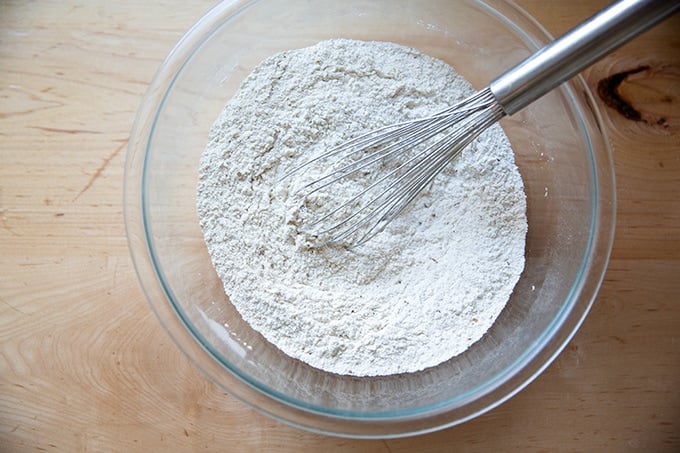
Whisk together the water and honey until the honey dissolves, then add the mixture to the bowl, followed by the oil.
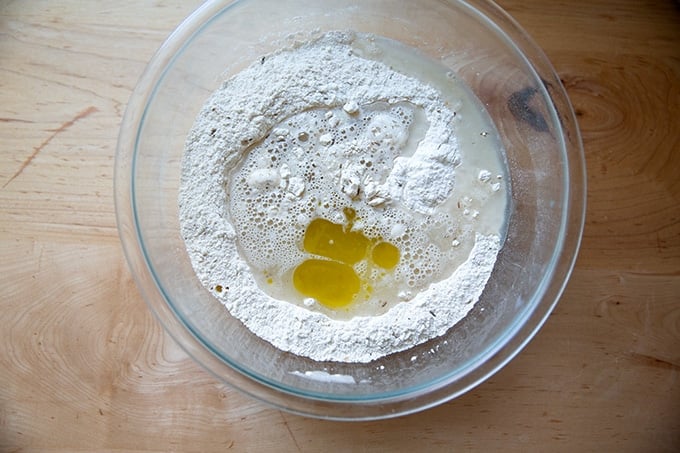
Stir with a spatula until you have a sticky dough ball.
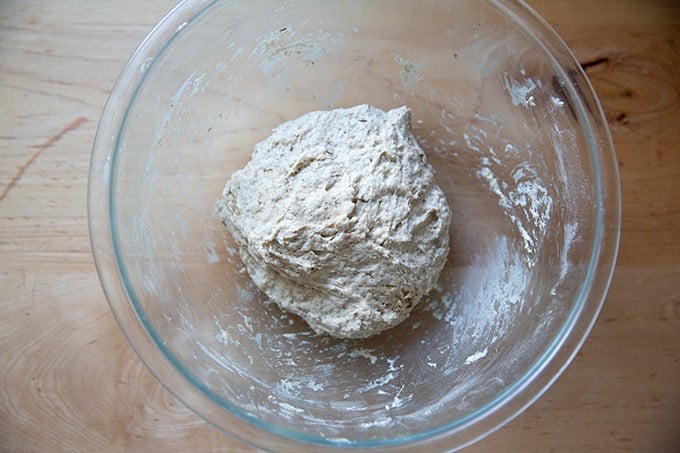
Cover the bowl and let rise until doubled, 2 to 3 hours.
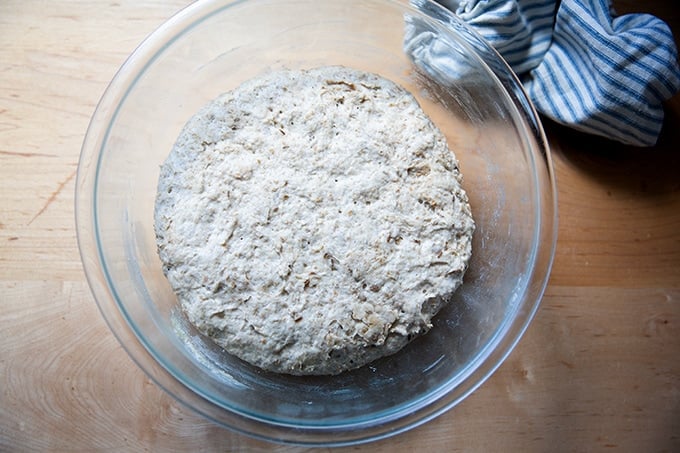
Rub the surface of the dough with a tablespoon of oil, then deflate the dough.
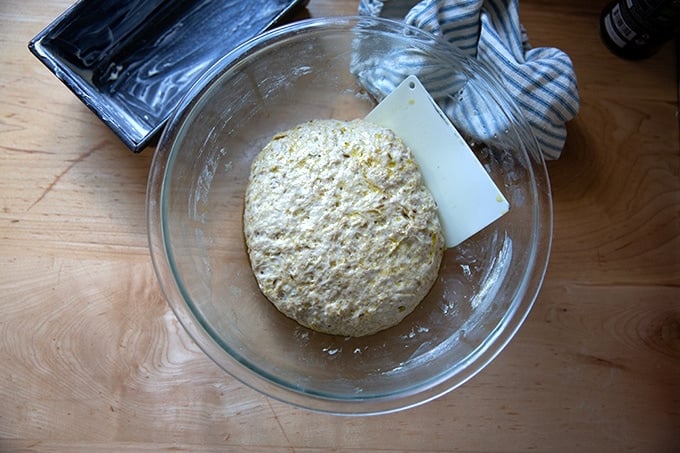
Turn the loaf over, then roll into a loaf shape.
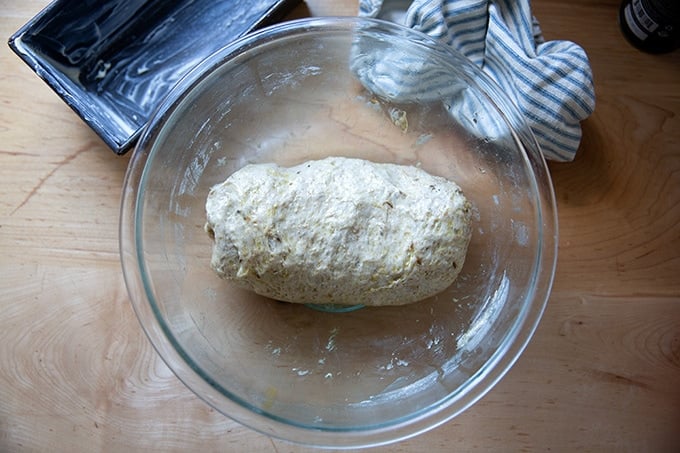
This video may help:
Transfer to a buttered 8.5×4.5-inch or 9×5-inch loaf pan.
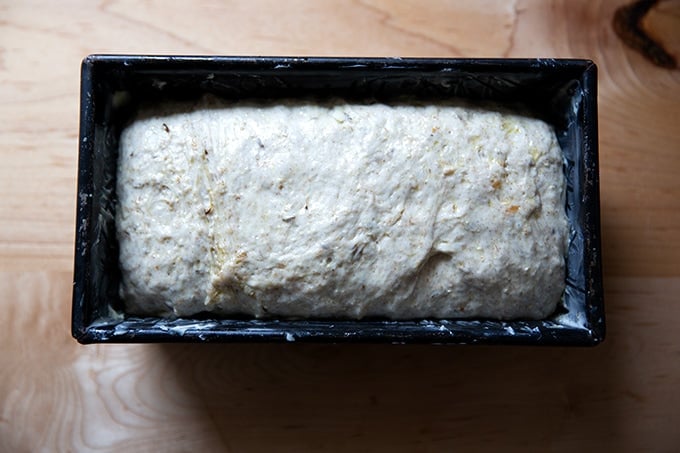
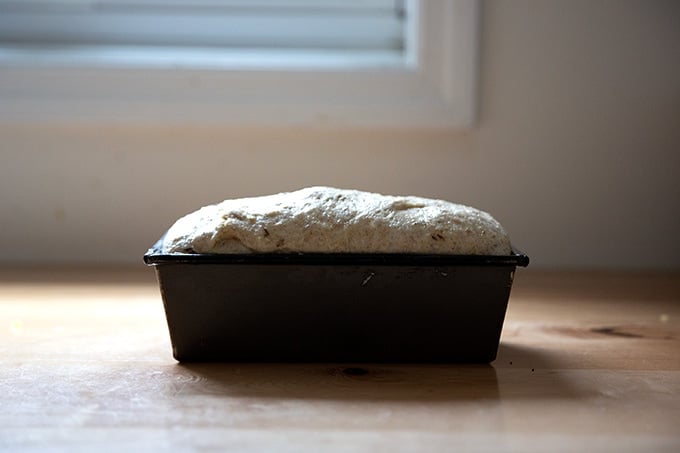
Let rise until the dough crowns the rim of the pan by about an inch.
Bake for 45 minutes at 375ºF.
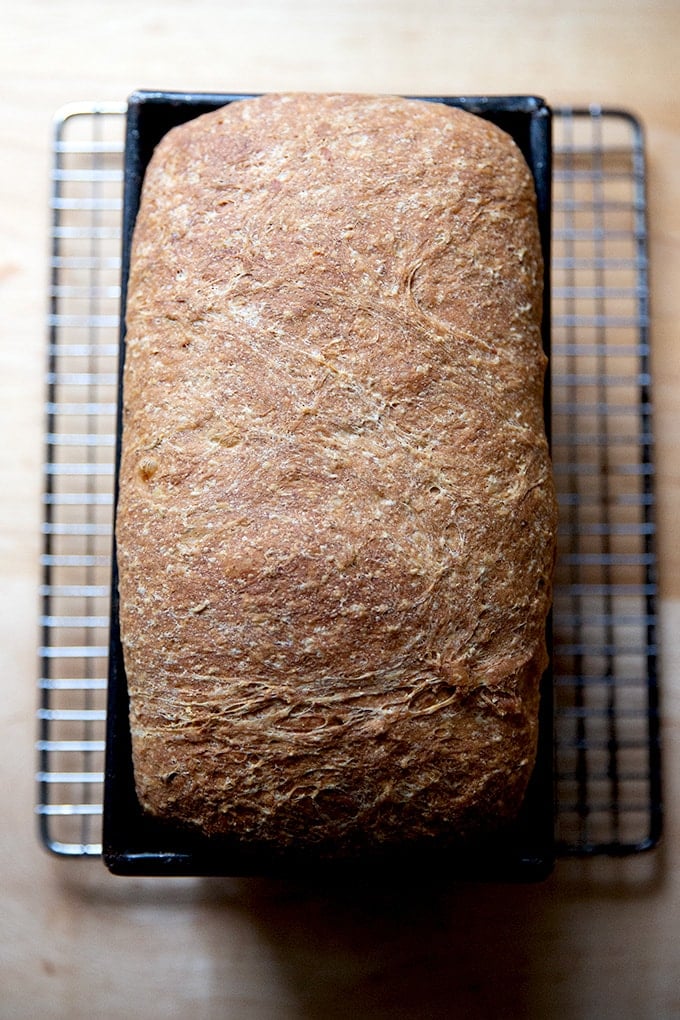
Let cool for at least 30 minutes before slicing. I like to slice it, then freeze it in bundles of 3 to 4 slices.
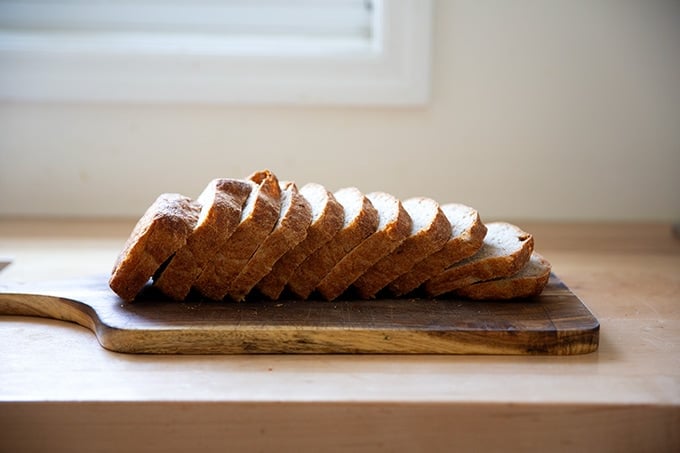
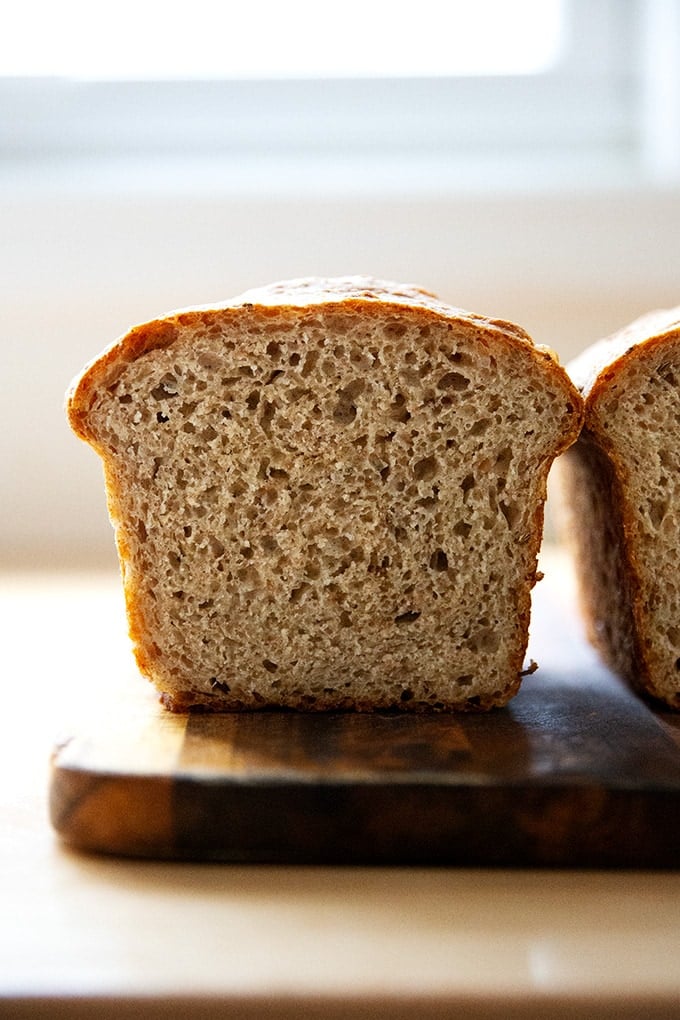
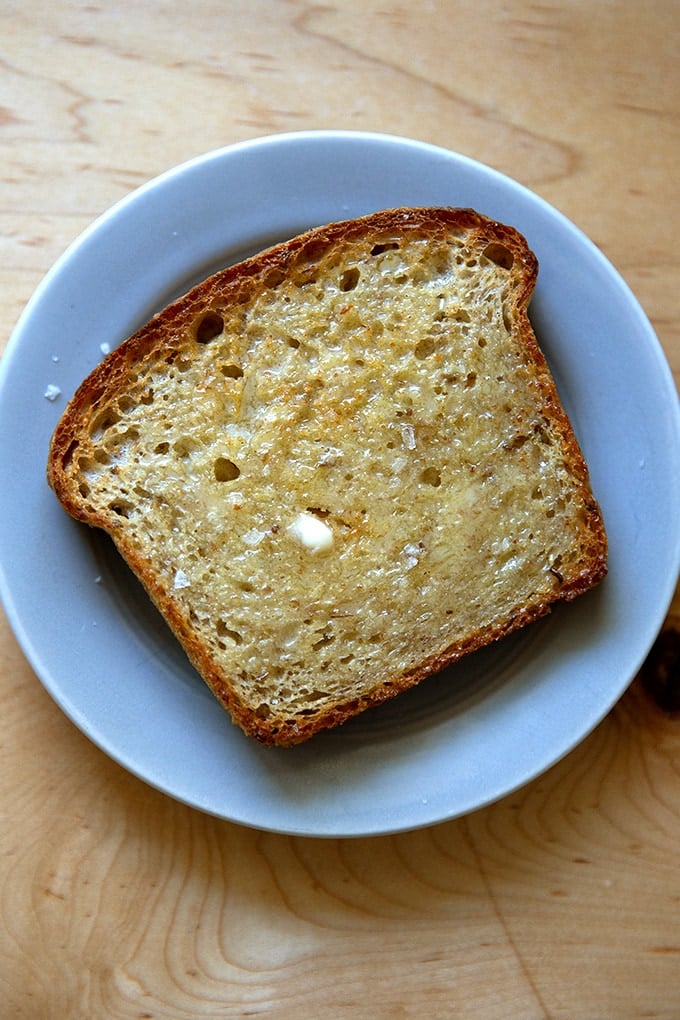
Like the maple-oat bread and the three-seed bread, this one makes great toast:
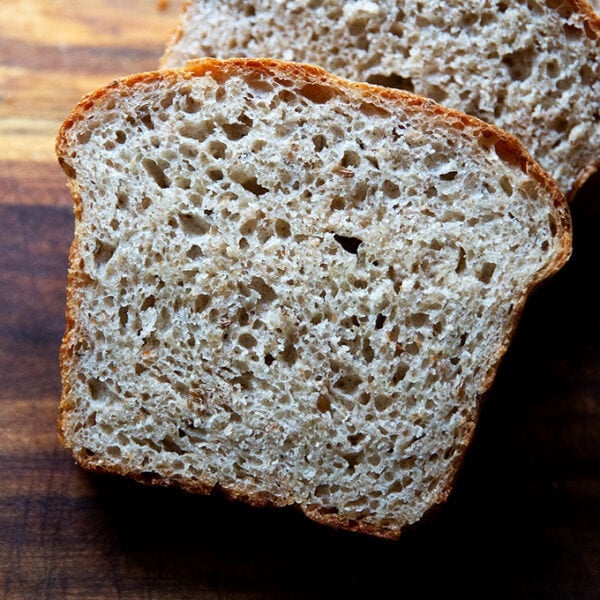
How to Make Homemade Rye Bread
- Total Time: 5 hours 45 minutes
- Yield: 1 loaf 1x
- Diet: Vegetarian
Description
Adapted from my cookbook, Bread Toast Crumbs.
Notes:
Flour: You could play around with increasing the proportion of rye flour in this recipe (which is roughly 20% by weight), but keep in mind that the more rye flour you use, the denser your bread will be. This is because rye flour is high in bran, the sharp shape of which cuts the gluten network, inhibiting its ability to trap air and produce a lofty loaf of bread.
Salt: I always use Diamond Crystal kosher salt. If you are using Morton’s kosher salt or fine sea salt use half the amount by volume or the same amount by weight.
Yeast: If using active dry yeast, sprinkle the yeast over the lukewarm water-honey mixture and let stand for 10 minutes; then proceed with the recipe.
Caraway: If you don’t like the flavor of caraway, simply omit the seeds or use less: 1 to 2 teaspoons or to taste.
Ingredients
- 3 cups (384 g) bread or all-purpose flour
- 1 cup (96 g) rye flour, see note
- 2 teaspoons (10 g) kosher salt, see note
- 2 teaspoons (10 g) instant yeast, see note
- 1 tablespoon (9 g) caraway seeds, see note
- 1.75 cups (395 g) lukewarm water
- 2 tablespoons (42 g) honey or maple syrup
- 2 tablespoons (28 g) extra-virgin olive oil, divided
- Softened unsalted butter, for greasing
Instructions
- In a large bowl, whisk together the flours, salt, instant yeast, and caraway seeds, if using. In a medium bowl, whisk together the water and the honey until the honey is dissolved. Add to the flour, followed by 1 tablespoon of the oil. Using a rubber spatula, mix until the liquid is absorbed and the ingredients form a sticky dough ball.
- Cover the bowl with a damp tea towel or a cloth bowl cover or plastic wrap and set aside in a warm spot to rise for 2 to 3 hours, until the dough has doubled in volume.
- Preheat the oven to 375ºF. Grease an 8.5×4.5-inch (or 9×5-inch) loaf pan generously with softened butter.
- When the dough has doubled, drizzle the remaining tablespoon of olive oil over the top and use your hand to rub the oil over the surface to coat. Use your hand again to release the dough from the sides of the bowl, then flip the ball over so that the oil side is down. Roll the dough into a coil or into a loaf shape, then transfer to your prepared pan seam side down. Watch this video for guidance.
- Let the dough rise on the countertop (preferably in a warm, draft-free spot) for 45 minutes to an hour or until the dough has risen significantly in the pan — it should be doming above the rim of the pan by about one inch. See photos for reference.
- Transfer the pan to the oven and bake for 45 minutes, or until the top is evenly browned. Remove the pan from the oven and turn the loaf out onto a cooling rack. Let the loaf cool for at least 30 minutes before slicing.
- Prep Time: 5 hours
- Cook Time: 45 minutes
- Category: Bread
- Method: Oven
- Cuisine: American
This post may contain affiliate links. Please read my disclosure policy.






501 Comments on “How to Make Homemade Rye Bread”
Love this recipe, bread has the most awesome flavour. If I was to put in a Dutch oven would I bake at same temperature of 375 degrees and bake for 45 minutes as well? Curious about trying this 🙂
Hi Kathy,
To use a Dutch oven, try this: Preheat a Dutch Oven for 45 minutes at 450ºF. Dust a clean work surface with flour. After the first rise, turn the dough out onto the floured surface and shape it into a ball: I like to fold it envelope style from top to bottom, then side to side; then I flip it over and use the pinkie edges of my hands to pinch the dough underneath and create some tension. Transfer the dough to a sheet of parchment paper. Let rest for 20 minutes. If you feel your dough is spreading too much you can lift up the sheet of parchment paper, dough and all, and place it in a bowl of a similar size. After the 20 minutes, transfer the dough, parchment paper and all to the Dutch oven. Carefully cover it. Bake 30 minutes. Uncover. Bake 15 minutes more.
I’ve made this recipe twice now and it is absolute perfection! My family requested it instead of sourdough their usual “favorite”.
Wow! Amazing to read this, Sally Ann! Thanks for writing 🙂
This rye bread recipe is outta site! It is super soft on the inside and has a crusty exterior. I’ve made it twice now and both times perfect.
Great to hear, Corinne! Thanks so much for writing 🙂
I love this bread and make it every week. I’d like to know if I can add sourdough starter to it ? Would anything in the recipe change?
Hi! I would try using 50 grams of starter. That amount should allow you to make the recipe without any other changes. If the dough feels excessively wet, meaning if it doesn’t form a ball, you may need to add a touch more flour. Obviously, both of the rises will take much more time due to the nature of sourdough.
This recipe is amazing. I’ve lived in France for many years and have missed this bread. We used it to make the best sandwiches ever. My French husband is hooked. Move over baguette, rye has arrived. A million thanks for this.
Awww, so nice to read this, Ananda! Thanks so much for writing and sharing this.
Is there a reason the rye weight is 1/4 the weight of AP flour and now 1/3?
Hi! Can you clarify your question? I’m not understanding.
Sorry I had some typos in there.
The rye weight is 96g and the AP weight is 4x that but volume is only 3x the rye volume. Is AP that much denser?
Got it, thank you for clarifying. Yes! Rye flour is much lighter than ap or bread flour.
Keep in mind: there is no standard for flour weights. Every baker/recipe publisher has his/her own standard. If you compare the weight of KAF’s rye to Bob’s Red Mill rye to the New York Times’ recipe writers’ rye, etc., they will all list a different amount. Same is true for ap or bread flour. When I spoon rye flour into a 1-cup measuring cup set on a scale, I get roughly 96 grams.
Hope that makes sense.
I just baked my bread using your recipe. And my bread looks exactly like your pictures. It smells amazing, tastes amazing and is so easy to make. Exactly what I needed. Thank you.
Great to hear, Aliona! Thanks so much for writing 🙂
This was so tasty and so simple! I used a locally milled rye flour and for future loves I want to try adding more (and maybe even some whole wheat flour) to impart more nuttiness/density. Thanks for the video tutorial—made the process very clear and easy to follow!
Great to hear, Claire! Thanks so much for writing and sharing this. Your rye flour sounds lovely.
Hi Alexandra,
I have a question about the “stretch & fold” option that are found in most no-knead bread recipes. I see that this particular recipe doesn’t call for a S&F step and I’m wondering if it’s because of the nature of rye flour and the sharpness of the bran as you mentioned in your notes?
Btw, yours are the ONLY bread recipes I ever use; in fact, I cannot show up to my mom’s house if I’m carrying your over-night focaccia bread with me!
I’ve made this rye bread recipe several times already and it always turns out beautifully but this time I thought I’d try to add one S&F to the prep and see if there’s a difference. Thanks in advance for any input you may impart. 🍞👩🍳😊
Awww, thank you, Tracy! This means a lot. Since writing Pizza Night, during the testing for which I discovered the incredible benefit of doing just one set of stretches and folds, I basically always add a set of stretches and folds to every bread recipe I make. My guess is that one or two sets of stretches and folds here, will definitely help. Rye does always impede the loft a bit, so you won’t get the height of an all-bread flour loaf, but I do think this loaf could benefit from some s&fs. If you give it a go, please circle back. And I will try to make this bread this week with a few sets of stretches and folds to see if I get a bit more loft. I will add notes to the recipe if I do. Thanks for writing!
Thanks for your thoughtful reply! So, I did just one set of 8 stretch & folds and I believe that resulted in a marginally airier (if that’s a word 🤔) crumb. I did note that the dough didn’t transform into a taut, smooth ball like it normally does when using 100% white flour. So next week I’m going to try using cooler water and do 3 sets of stretch and folds because now I’m curious if the dough will smooth out eventually.
I’ll keep an eye out for updates to this great recipe!
Interesting! Yeah, rye flour definitely behaves differently. I like your cool water idea. You could also consider using less yeast to slow down the first rise even more and allow more time for those stretches and folds. I’m looking forward to trying this soon.
We love caraway seeds, so we actually add an extra tablespoon, and it’s PERFECT. Love this recipe. Easy, almost impossible to mess up snd SO GOOD 🍞
Great to hear, Christel! Thanks so much for writing and sharing your notes and encouraging words.
Excellent recipe! I substituted molasses for the honey which made the bread darker and earthier. Delicious!!
Great to hear, Diane! Love the idea of the molasses swap. Thanks so much for writing and sharing this 🙂
Your recipes are magical! Thank you for always sharing. We’ve been struggling to find a reliable sandwich/toast bread and this one got 5 stars from the whole family! Bonus for me is it’s so easy and satisfying to make. We make your pizza weekly. Thanks for helping me shape our home life with clean, delicious food!
Awww, I’m so happy to read this, Sarah! Thanks so much for taking the time to write. Your kind words mean so much 🙂 So happy to hear about the pizza too! 🍕🍕🍕